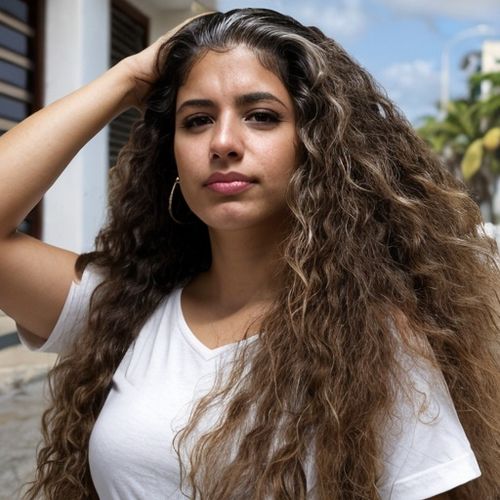
In a significant stride towards social justice and equality, Puerto Rico's governor signed a groundbreaking law on Wednesday that prohibits discrimination against individuals wearing Afros, curls, locs, twists, braids, and other natural hairstyles. This legislative move has been met with widespread celebration, particularly among those who have long advocated for explicit protections in the realms of work, housing, education, and public services. The law represents a victory not just for the present generation but for all those to come, as it paves the way for a more inclusive and accepting society.
Welmo Romero Joseph, a community facilitator with the nonprofit Taller Salud, encapsulated the sentiment of the moment, stating, “It’s a victory for generations to come.” Taller Salud is one of several organizations that have been instrumental in pushing for this law. Romero emphasized the law's powerful message: “you can reach positions of power without having to change your identity.” This is a crucial step in affirming the inherent value and dignity of every individual, regardless of their racial or ethnic background.
The need for such a law in Puerto Rico became starkly apparent in light of a 2016 precedent set by a U.S. Court of Appeals. The court dismissed a discrimination lawsuit and ruled that an employer’s no-dreadlock policy in Alabama did not violate Title VII of the Civil Rights Act. This decision highlighted a significant gap in legal protections, particularly for individuals with natural hairstyles that are often associated with Black or Afro-descendant communities.
Earlier this year, legislators in the U.S. territory held a public hearing on the issue, providing a platform for Puerto Ricans to share their personal experiences of discrimination. These stories included job offers that were conditional upon haircuts, a clear violation of an individual's right to express their cultural and personal identity. Romero himself recalled a poignant incident from his high school days when a principal ordered him to cut his flat top, a hairstyle that was a source of pride for him. “I was a 4.0 student. What did that have to do with my hair?” he questioned, highlighting the absurdity of such demands.
Puerto Rico, with a population of 3.2 million, is a racially diverse territory where more than 1.6 million people identify as being of two or more races, and nearly 230,000 identify solely as Black, according to the U.S. Census. Despite this diversity, the law signed on Wednesday acknowledges the harsh reality that “people identified as Black or Afro descendant in Puerto Rico still face derogatory treatment, deprivation of opportunities, marginalization, exclusion, and all kinds of discrimination.” This law is a direct response to these ongoing challenges, aiming to create a more equitable environment for all.
While the passage of this law is a monumental achievement, Romero and others caution that it is only the first step. Measures must be put in place to ensure that the law is not just a symbolic gesture but is actively enforced. This includes educating the public about the new legal protections, holding violators accountable, and fostering a cultural shift that values diversity and inclusion.
On the U.S. mainland, the movement against hair discrimination has gained significant momentum, with at least two dozen states approving versions of the CROWN Act. The CROWN Act, which stands for “Creating a Respectful and Open World for Natural Hair,” aims to ban race-based hair discrimination. Texas, for example, passed the act after a Black high school student was suspended for his dreadlocks, which school officials claimed violated the dress code. However, a March report from the Economic Policy Institute revealed that not all states have amended their education codes to protect public and private high school students, and some states have allowed certain exceptions to the CROWN Act.
The federal version of the CROWN Act, which was passed by the U.S. House of Representatives in 2022, unfortunately failed in the Senate. In May, Democratic lawmakers reintroduced the legislation, demonstrating a continued commitment to addressing this form of discrimination at the national level. The reintroduction of the bill is a hopeful sign that the U.S. may soon follow in the footsteps of Puerto Rico and other states in recognizing and protecting the rights of individuals to wear their hair in natural styles without fear of discrimination.
The law signed in Puerto Rico is more than just a legal document; it is a symbol of progress and a beacon of hope for communities that have long faced discrimination. It sends a clear message that natural hairstyles are not just a matter of personal preference but are an integral part of one's cultural identity. By prohibiting discrimination based on hair, Puerto Rico is setting a powerful example for the rest of the nation and the world.
In conclusion, the new law in Puerto Rico represents a significant milestone in the fight against racial and cultural discrimination. It is a testament to the power of collective action and the importance of legal protections in promoting social change. As Puerto Rico leads the way, it is incumbent upon other states and the federal government to follow suit, ensuring that all individuals, regardless of their race or ethnicity, can express their identity freely and without fear of discrimination. This law is not just about hair; it is about dignity, respect, and the fundamental right to be oneself.
By Jessica Lee/Feb 13, 2025
By Grace Cox/Jan 16, 2025

By Emma Thompson/Jan 16, 2025
By David Anderson/Feb 13, 2025

By Victoria Gonzalez/Feb 13, 2025
By Sarah Davis/Jan 16, 2025

By Thomas Roberts/Feb 13, 2025
By George Bailey/Feb 13, 2025

By Rebecca Stewart/Feb 13, 2025
By Emma Thompson/Jan 16, 2025

By Lily Simpson/Feb 13, 2025

By Victoria Gonzalez/Jan 16, 2025

By Victoria Gonzalez/Feb 13, 2025

By Joshua Howard/Feb 13, 2025

By Elizabeth Taylor/Jan 16, 2025

By Michael Brown/Jan 16, 2025

By David Anderson/Jan 16, 2025
By Christopher Harris/Jan 16, 2025

By David Anderson/Feb 13, 2025
By Elizabeth Taylor/Jan 16, 2025