In the quiet lanes of Fujian's Hui'an county and the mountainous villages of Yunnan's Chuxiong, a quiet revolution is taking place. It is not one of protest or politics, but of fabric, thread, and centuries-old tradition. This is the story of how "local internationalization" is bringing the profound cultural heritage of these regions to the global fashion stage, not as exotic curiosities, but as central inspirations for contemporary design.
The concept of "local internationalization" moves beyond the traditional model of globalization, which often flattens cultural distinctiveness. Instead, it focuses on empowering local cultures to engage with the global stage on their own terms, preserving their essence while finding new relevance in a wider context. For the artisans of Hui'an and Chuxiong, this has meant a journey from local markets to international catwalks, a journey that honors their past while securing their future.
The Hui'an Women and the Blues of the Sea
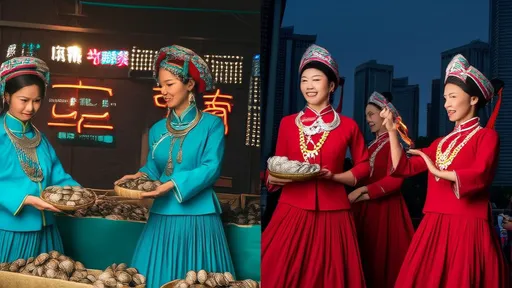
For generations, the women of Hui'an have been a distinctive sight along the Fujian coastline. Their iconic attire—vibrant floral headscarves, short blue jackets, and wide, bell-shaped black trousers—is more than just clothing; it is a living chronicle of their history as resilient fisherfolk and farmers. The intricate silver belts that jingle with their movement and the golden bamboo hats that shield them from the sun are symbols of a unique cultural identity forged by the sea and the land.
For decades, this traditional dress was seen as a relic, something to be worn by older generations while the youth gravitated towards modern fashion. However, a shift began when a new wave of Chinese designers, armed with global education and a renewed sense of cultural pride, started looking inward for inspiration. They saw in the Hui'an costume not just a folk costume, but a powerful aesthetic language. The striking color contrast of yellow, blue, and black, the practical yet elegant silhouette, and the symbolic patterns spoke of a deep connection to nature and community.
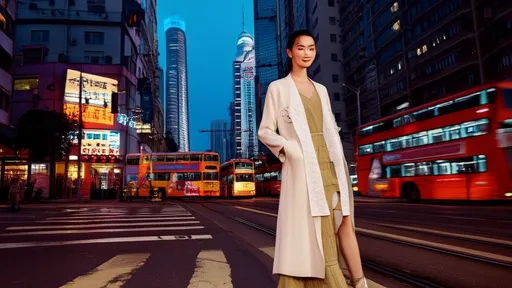
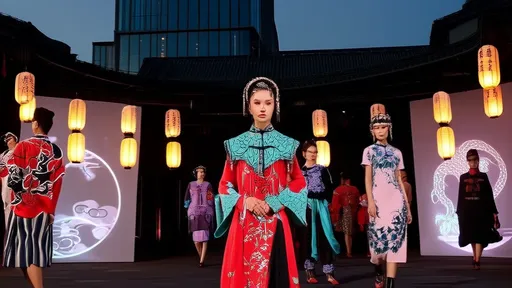
Designers began deconstructing these elements. The short jacket was reimagined in luxurious silks and modern cuts, its traditional floral embroidery translated into sophisticated prints. The iconic wide trousers inspired fluid, architectural silhouettes in high-fashion collections. The most poignant adoption has been the headscarf. Once a practical item for Hui'an women working in the salty wind, its vibrant patterns and tying methods have been reinterpreted as elegant neckpieces, hair accessories, and even integrated into the lines of gowns on runways from Paris to Shanghai. The clothes no longer tell the story of a fisherwoman's toil, but they carry the DNA of her strength and elegance into a new narrative.
Chuxiong's Yi Minority: Embroidering a Cosmic Vision
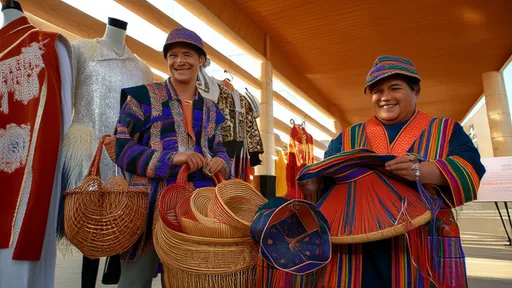
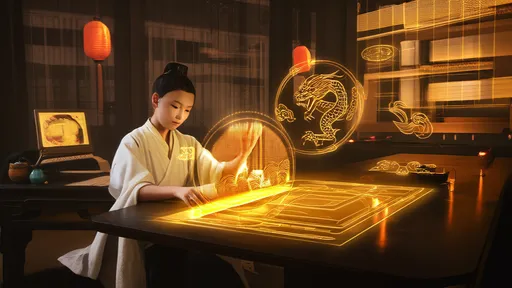
Meanwhile, in the highlands of Yunnan, the Yi people of the Chuxiong Yi Autonomous Prefecture have safeguarded an even more ancient textile tradition. Yi embroidery is a language without words, a vibrant tapestry where every stitch, color, and pattern holds profound meaning. The embroidery is a visual representation of their cosmology, depicting the sun, moon, stars, fire, and tigers—all central to Yi spirituality and mythology. The technique is incredibly intricate, often involving appliqué, cross-stitch, and seed stitching, creating a dense, textured surface that is rich with symbolism.
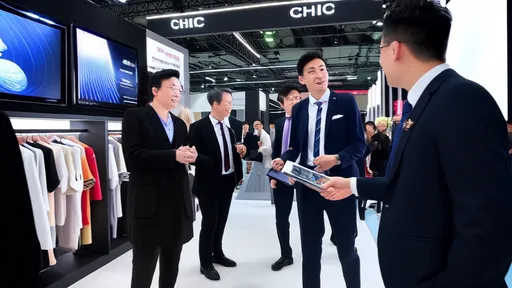
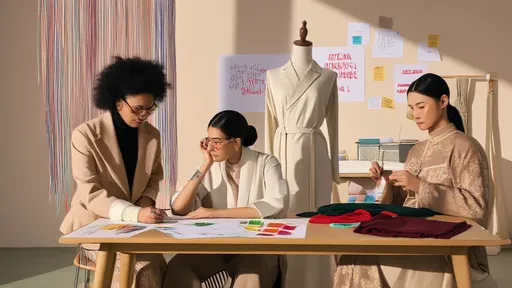
The journey of Yi embroidery to the international stage is a testament to the power of collaboration. Rather than simply appropriating the patterns, several forward-thinking fashion houses and designers have engaged directly with Yi artisans. These partnerships are built on respect and mutual learning. Designers provide the canvas—a modern garment, a handbag, a pair of shoes—while the Yi embroiderers imbue it with their ancestral knowledge. The result is not a pastiche but a fusion, where the timeless symbolism of the Yi people meets contemporary luxury.
On international runways, jackets have been seen adorned with the Yi's signature "tiger's head" pattern, a symbol of bravery and protection, rendered in shimmering silk threads. Evening gowns feature cascading patterns inspired by mountain ranges and flowing rivers, motifs central to the Yi's reverence for nature. This is not merely decoration; it is a form of cultural translation. Each piece that walks down the catwalk carries with it stories of creation, identity, and a people's relationship with the universe, making the global fashion audience not just consumers of beauty, but witnesses to a living culture.
The Ripple Effects: Beyond the Catwalk
The impact of this "local internationalization" extends far beyond the glare of the flashbulbs. For the communities in Hui'an and Chuxiong, the global recognition of their cultural assets has had tangible benefits. There is a renewed sense of pride among the younger generation. Where once they might have seen their heritage as outdated, they now see it as a source of unique value and potential career opportunity. Workshops teaching traditional embroidery and tailoring have seen a surge in attendance from young people eager to learn the skills of their ancestors.
Economically, the demand for authentic craftsmanship has created a sustainable livelihood for many artisans. They are no longer producing solely for the local tourist market but are being commissioned for high-value projects. This has led to the development of social enterprises and cooperatives that ensure fair wages and preserve traditional techniques. The cultural capital of these regions is being transformed into economic capital, fostering community development from within.
Furthermore, this movement challenges the very definition of "international fashion." For too long, the global fashion narrative has been dominated by a Western-centric viewpoint. The successful integration of Hui'an and Chuxiong's aesthetics signals a shift towards a more polycentric fashion world, where inspiration is drawn from a truly global pool of cultural wisdom. It promotes a dialogue of equals, where ancient traditions are not overshadowed by modern trends but are essential contributors to them.
Navigating the Challenges
This path is not without its challenges. The primary concern is that of cultural appropriation versus appreciation. The line can be thin. The key differentiator lies in context, credit, and compensation. Successful initiatives are those that involve the source communities in the creative process, acknowledge the origin of the inspiration, and ensure that the benefits are shared equitably. It is about partnership, not extraction.
There is also the risk of dilution. As demand grows, there may be pressure to simplify patterns or speed up production, potentially compromising the integrity and complexity of the traditional art forms. Safeguarding the authenticity of the techniques is paramount. This requires continuous dialogue between designers, brands, and the cultural custodians—the artisans themselves.
In conclusion, the story of Hui'an and Chuxiong is a powerful example of how cultural heritage can thrive in the modern world. Through the pathway of "local internationalization," these communities are not being globalized; they are globalizing themselves. They are taking control of their narrative, presenting their culture to the world with confidence and sophistication. The Hui'an jacket on a Parisian runway and the Yi embroidery on a Milanese handbag are more than just fashion statements. They are bold declarations that local cultures, with their deep histories and unique beauties, have a vital and vibrant place on the world stage. They remind us that the future of global culture may not lie in homogeneity, but in the beautiful, intricate, and respectful weaving together of distinct local threads.

By /Sep 23, 2025
By /Sep 23, 2025
By /Sep 23, 2025
By /Sep 23, 2025

By /Sep 23, 2025

By /Sep 23, 2025
By /Sep 23, 2025
By /Sep 23, 2025

By /Sep 23, 2025
By /Sep 23, 2025

By /Sep 23, 2025

By /Sep 23, 2025

By /Sep 23, 2025
By /Sep 23, 2025
By /Sep 23, 2025
By /Sep 23, 2025
By /Sep 23, 2025

By /Sep 23, 2025

By /Sep 23, 2025
By /Sep 23, 2025