In the ever-evolving landscape of global commerce, the strategies international brands employ to penetrate and thrive in the Chinese market have become a subject of intense study and fascination. The China International Clothing & Accessories Fair, commonly known as CHIC, has emerged as a pivotal platform, far transcending its role as a mere trade show. It has become a strategic nexus where global ambitions meet local realities, a microcosm of the intricate dance of partnership and distribution that defines success in this complex marketplace.
The sheer scale and dynamism of China's consumer base present an irresistible allure for brands from every corner of the world. However, the path to capturing a share of this vast market is fraught with challenges, from nuanced cultural preferences and fierce local competition to a rapidly digitizing retail environment and evolving regulatory frameworks. For many, the journey begins not with a splashy advertising campaign, but with a deliberate and calculated presence at CHIC. This is where the foundational relationships are forged, where the first, crucial steps in building a viable China strategy are taken.
The Strategic Imperative of CHIC in Market Entry
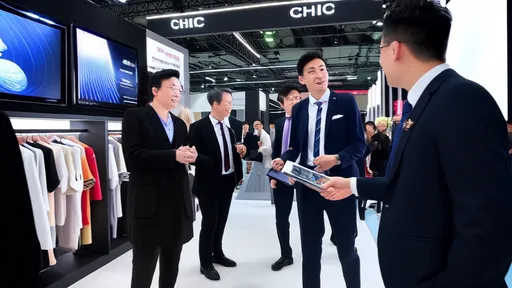
For an international brand eyeing China, CHIC is more than an exhibition; it is a strategic reconnaissance mission. The fair offers an unparalleled, condensed overview of the entire apparel and accessories ecosystem. Walking the halls, one encounters not just products, but the entire value chain—from fabric suppliers and manufacturers to distributors, retailers, and competing brands. This holistic view is invaluable. It allows brand representatives to gauge market trends firsthand, understand pricing structures, assess the quality and aesthetics of local competitors, and, most importantly, identify potential gaps in the market that their brand could uniquely fill.
The environment at CHIC is one of intense business focus. Unlike consumer-facing fairs, the conversations here are about logistics, margins, territory rights, and market potential. It is a place for serious players. For a new entrant, the objective is to move beyond simply showcasing a collection. The goal is to demonstrate a clear understanding of the Chinese consumer and a committed, long-term vision for the brand's development in the region. This involves meticulous preparation: marketing materials translated into fluent Chinese, a well-trained team that can articulate the brand's unique selling proposition, and a presentation that resonates with local aesthetic sensibilities without diluting the brand's core identity.
Identifying the Right Partners: Beyond a Transactional Relationship
The search for a partner at CHIC is arguably the most critical component of the strategy. In China, the right partner is not merely a distributor; they are a guide, a cultural translator, and a strategic ally. The wrong partnership can lead to brand dilution, financial loss, and a tarnished reputation from which recovery is difficult. Therefore, the approach must be highly selective and strategic.
Brands are increasingly looking for partners who offer more than just logistical capability. They seek entities with deep market intelligence, strong relationships with key retail channels—both online and offline—and a proven track record of building brand equity for other international names. The ideal partner understands the nuances of regional differences within China; what works in the sophisticated boutiques of Shanghai may not resonate with consumers in the burgeoning cities of Chengdu or Xi'an. They must also be adept at navigating the world of Chinese social media and e-commerce platforms, which are indispensable for building brand awareness and driving sales.
The conversations at CHIC are therefore deep and probing. They revolve around shared values and long-term goals. A brand must assess a potential partner's portfolio: Do they represent complementary brands? Do they have a reputation for integrity and fair dealing? Crucially, the partner must believe in the brand's story and have a coherent plan for introducing it to the Chinese audience. This is a courtship, not a quick sale. The most successful collaborations are those built on a foundation of mutual trust and a shared vision for growth.
Crafting a Multi-Channel Distribution Strategy
The discussion of partnerships naturally leads to the concrete planning of distribution channels. The days of a one-size-fits-all approach are long gone. The Chinese retail landscape is a complex, multi-layered organism, and a successful strategy must be equally sophisticated. CHIC serves as a live directory of these channels, allowing brands to evaluate their options directly.
The first consideration is often the balance between physical and digital presence. While the dominance of Tmall, JD.com, and Pinduoduo is undeniable, the experiential nature of fashion has led to a resurgence of interest in physical retail, particularly in the form of concept stores and boutique placements within high-end department stores. At CHIC, brands can meet with representatives from major mall operators and department store chains, discussing footfall, consumer demographics, and co-marketing opportunities. Simultaneously, they can engage with e-commerce enablers who specialize in managing brand stores on major platforms, handling everything from digital marketing and customer service to logistics and fulfillment.
Another layer involves tiered city strategy. A brand might launch with a flagship store in Shanghai or Beijing to build prestige, then use CHIC to find regional distributors capable of managing expansion into second- and third-tier cities, where growth potential is immense. Furthermore, the rise of cross-border e-commerce platforms offers a lower-risk model for initial market testing, allowing brands to sell directly to Chinese consumers without establishing a formal legal entity in China. Partners met at CHIC can provide expert guidance on the relative merits of each model, helping brands construct a hybrid, agile distribution network that can adapt to changing market conditions.
Navigating Cultural Nuances and Consumer Expectations
A strategy conceived in a European or American boardroom cannot be simply transplanted to China. The Chinese consumer is discerning, digitally savvy, and has a unique set of expectations regarding brand communication, product offering, and customer service. CHIC provides an immersive crash course in these nuances.
Product adaptation is a key topic. This doesn't necessarily mean a complete overhaul of designs, but subtle adjustments can be crucial. This could involve offering different sizing specifications, incorporating auspicious colors or motifs during key holiday periods like Chinese New Year, or developing exclusive products for the market. The feedback from potential partners and retailers at CHIC is instantaneous and invaluable in this regard.
Moreover, the marketing playbook is entirely different. Success is heavily dependent on a brand's ability to leverage key opinion leaders (KOLs) and key opinion consumers (KOCs), create engaging content for platforms like Douyin (TikTok's Chinese counterpart) and Xiaohongshu (Little Red Book), and participate in shopping festivals like Singles' Day. Partners identified at CHIC are expected to have expertise in these areas. They act as the brand's cultural conduit, ensuring that marketing campaigns are not just translated, but trans-created to resonate authentically with the local audience, building emotional connections that transcend a simple transactional relationship.
The Long Game: From CHIC to Sustainable Growth
Ultimately, the activities at CHIC are not an end in themselves but the beginning of a long-term commitment. The partnerships and distribution plans formulated here set the trajectory for the brand's Chinese journey. The most successful international brands view their participation in CHIC not as an annual event, but as an ongoing dialogue with the market.
This involves a cycle of learning and adaptation. After initial launch, sales data, customer feedback, and market trends gathered by the local partner must be fed back to the global headquarters. This intelligence should inform future product development, marketing strategies, and even the brand's messaging globally. A brand that listens and adapts to the Chinese market often finds that the innovations and insights gained benefit its operations worldwide.
In conclusion, for an international brand, the China strategy is a complex puzzle, and CHIC provides the crucial first pieces. It is where the search for the right partner—a true ally in the market—begins. It is where a multi-faceted, agile distribution model is architected. And it is where a deep appreciation for the cultural and commercial nuances of China is cultivated. The brands that approach CHIC with strategic intent, cultural humility, and a long-term perspective are the ones that move beyond being mere participants in the Chinese market to becoming beloved and enduring names in the wardrobes and hearts of Chinese consumers.

By /Sep 23, 2025

By /Sep 23, 2025

By /Sep 23, 2025
By /Sep 23, 2025

By /Sep 23, 2025

By /Sep 23, 2025

By /Sep 23, 2025

By /Sep 23, 2025

By /Sep 23, 2025
By /Sep 23, 2025

By /Sep 23, 2025

By /Sep 23, 2025

By /Sep 23, 2025

By /Sep 23, 2025

By /Sep 23, 2025

By /Sep 23, 2025

By /Sep 23, 2025

By /Sep 23, 2025

By /Sep 23, 2025
By /Sep 23, 2025