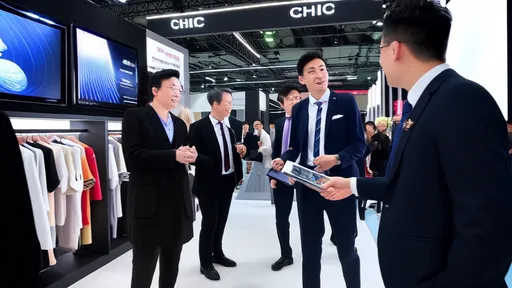
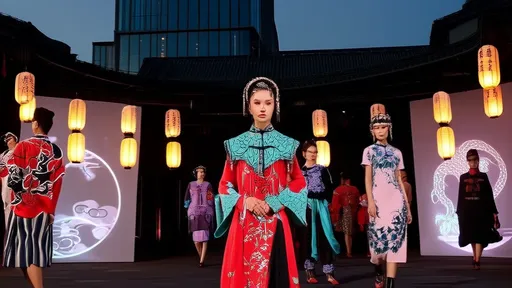
Under the soft glow of runway lights, a model glides forward, her garment a breathtaking fusion of traditional Chinese ink wash painting and sharp, contemporary tailoring. This moment, captured during the recent China International Fashion Week (CIFW), is more than a fashion statement; it is a powerful declaration of cultural confidence. The event has evolved from a simple industry showcase into a vibrant platform where Eastern aesthetics converse fluently with the global language of design, articulating a new chapter in China's cultural narrative on the world stage.
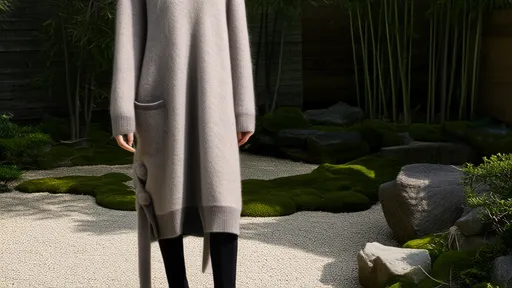
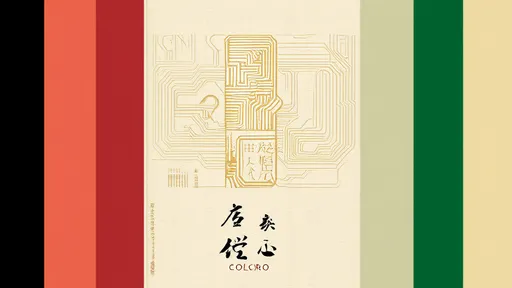
The concept of Eastern Aesthetics is not merely a stylistic choice but a profound philosophical framework rooted in centuries of art, literature, and thought. It emphasizes harmony, subtlety, and a deep reverence for nature. Unlike Western aesthetics, which often prioritizes dramatic expression and individualism, Eastern aesthetics seeks balance and the beauty found in the space between elements—the void that gives form meaning. Designers at CIFW are masterfully interpreting these principles. We see it in the flowing silhouettes that echo the graceful lines of calligraphy, in the intricate embroidery that tells ancient stories, and in the color palettes drawn from landscapes and ceramics. This is not nostalgia; it is a conscious, intelligent application of a rich cultural heritage to solve contemporary design challenges.
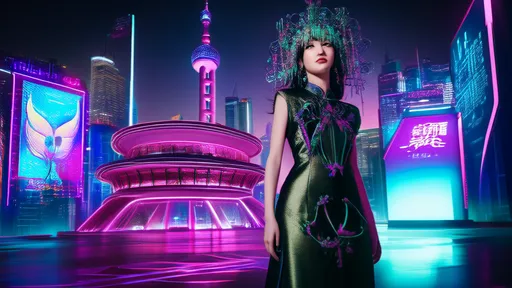
This journey towards global expression marks a significant shift. For decades, the global fashion narrative was largely dictated by centers like Paris, Milan, and New York. Chinese designers often looked outward for validation and trends. Today, the dynamic has changed. CIFW demonstrates that Chinese designers are no longer just participants in a global conversation; they are leading it. They are taking universal themes—sustainability, identity, technology—and filtering them through a uniquely Eastern lens. The result is a fresh, compelling perspective that resonates universally. A deconstructed qipao (cheongsam) speaks to global discussions about gender fluidity. The use of organic, plant-dyed fabrics addresses worldwide environmental concerns, yet the techniques and inspirations are distinctly Chinese. This ability to contribute meaningfully to global dialogues is the essence of true cultural confidence.
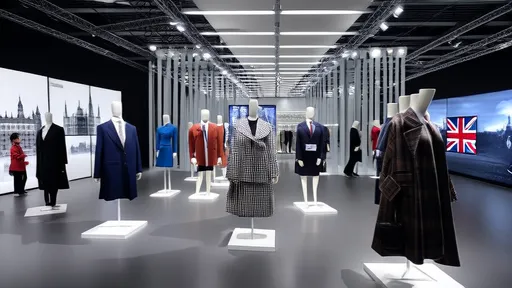
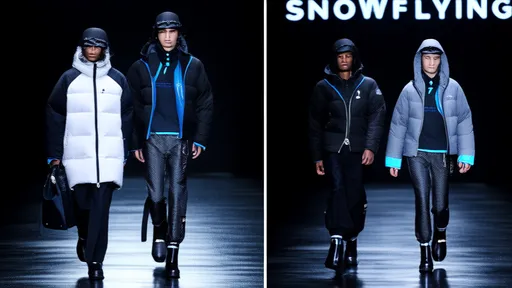
The runway serves as the most visible testament to this newfound confidence. Collections are bold, experimental, and unapologetically Chinese. Designers like Masha Ma, Huishan Zhang, and Angel Chen are celebrated for their ability to weave Chinese symbolism into high-fashion contexts that are immediately understandable to an international audience. One might see a jacket cut with the precision of modern architecture yet embroidered with a pattern inspired by mythical clouds. Another look might feature a bold, graphic print that, upon closer inspection, reveals itself as a modern reinterpretation of a Song Dynasty painting. This sophisticated layering of meaning demonstrates a deep understanding of both their own culture and the codes of international fashion. It’s a dialogue, not a monologue.
Beyond the glamour of the catwalk, this cultural confidence is deeply intertwined with the nation's broader socio-economic resurgence. As China's global influence grows in technology, business, and geopolitics, there is a parallel renaissance in its cultural and soft power. Fashion, being an immediate and visceral form of communication, is at the forefront of this movement. The government's support for creative industries and the "China Chic" trend has provided a fertile ground for designers to explore their heritage without restraint. Meanwhile, a generation of young Chinese consumers, proud of their national identity, eagerly embraces these designs, creating a powerful domestic market that fuels international ambition. This internal validation is crucial; it proves that the aesthetic is not manufactured for export but is an authentic expression of modern Chinese life.
Perhaps the most exciting development is the redefinition of luxury. For years, luxury was synonymous with European heritage brands. CIFW is challenging that notion by proposing a new kind of luxury—one rooted in craftsmanship, narrative, and philosophical depth. The meticulous hand-stitching of a piece, the time-honored technique of silk weaving, the story behind a specific motif—these are the elements that constitute value in this new paradigm. This shift encourages a global audience to appreciate luxury not just as a logo or a status symbol, but as an object imbued with culture, artistry, and soul. It elevates the entire conversation around what we wear and why.
Looking ahead, the impact of China International Fashion Week extends far beyond its seasonal schedule. It is cultivating a new generation of designers, critics, and consumers who are literate in both Eastern and Western aesthetic languages. This bi-cultural fluency is an invaluable asset in an increasingly interconnected world. The event is not about creating a separate, isolated fashion system, but about enriching the global tapestry of design with a strong, clear, and confident Chinese voice. It proves that cultural confidence is not about asserting superiority, but about having the assurance to share one's unique perspective and contribute to a collective creative future.
In conclusion, China International Fashion Week stands as a powerful symbol of a nation comfortable in its own skin, confidently drawing from its ancient past to shape its modern identity. Through the intelligent and innovative application of Eastern aesthetics, it achieves a global expression that is both authentic and influential. The runways of Beijing are no longer just presenting clothes; they are presenting a philosophy, a history, and a vision for the future. This is the true meaning of cultural confidence—a quiet, powerful assurance that one's own story is worth telling, and that the world is ready to listen.
By /Sep 23, 2025
By /Sep 23, 2025
By /Sep 23, 2025
By /Sep 23, 2025

By /Sep 23, 2025

By /Sep 23, 2025
By /Sep 23, 2025
By /Sep 23, 2025

By /Sep 23, 2025
By /Sep 23, 2025
By /Sep 23, 2025
By /Sep 23, 2025
By /Sep 23, 2025
By /Sep 23, 2025
By /Sep 23, 2025
By /Sep 23, 2025
By /Sep 23, 2025

By /Sep 23, 2025

By /Sep 23, 2025
By /Sep 23, 2025